






If you’re looking for inspiration on how to promote calendar sync to your fans, the Rugby Football Union is a great place to start. Across England Rugby and the Red Roses, they’ve built a really thoughtful, multi-channel approach that keeps ECAL visible and engaging throughout the season. Rather than relying on a single placement or a one-off post, they consistently show up in different ways, reaching fans wherever they are and making it as easy as possible to sync.
Here’s a look at how they do it, and some ideas for how you could bring a similar approach to your own channels.
How the Rugby Football Union (RFU) Do It
Player-led video content
Recently, one of the most engaging things the Rugby Football Union have done is put their athletes front and centre. A player-featured reel walking fans through exactly how to sync their calendar makes the whole process feel simple and personal. Fans connect with players, and seeing a familiar face explain something in a relatable way is far more compelling than a standard branded prompt.
Website pop-ups
The Rugby Football Union have used pop-ups in a couple of really effective ways. On their fixtures pages, a guided pop-up walks users through how to navigate to the sync feature, removing any friction for fans who might not know where to look. They’ve also run a bold “Never Miss a Match” pop-up on their homepage, using strong creative to catch fans the moment they land on the site. Both formats meet fans in the moment and make it impossible to miss.

Homepage promoted content
Their homepage consistently features bold, high-quality creative directing fans to sync their calendar as part of their promoted content. It’s often the first thing a fan sees when they land on the site, which makes it a powerful placement for driving awareness and action.
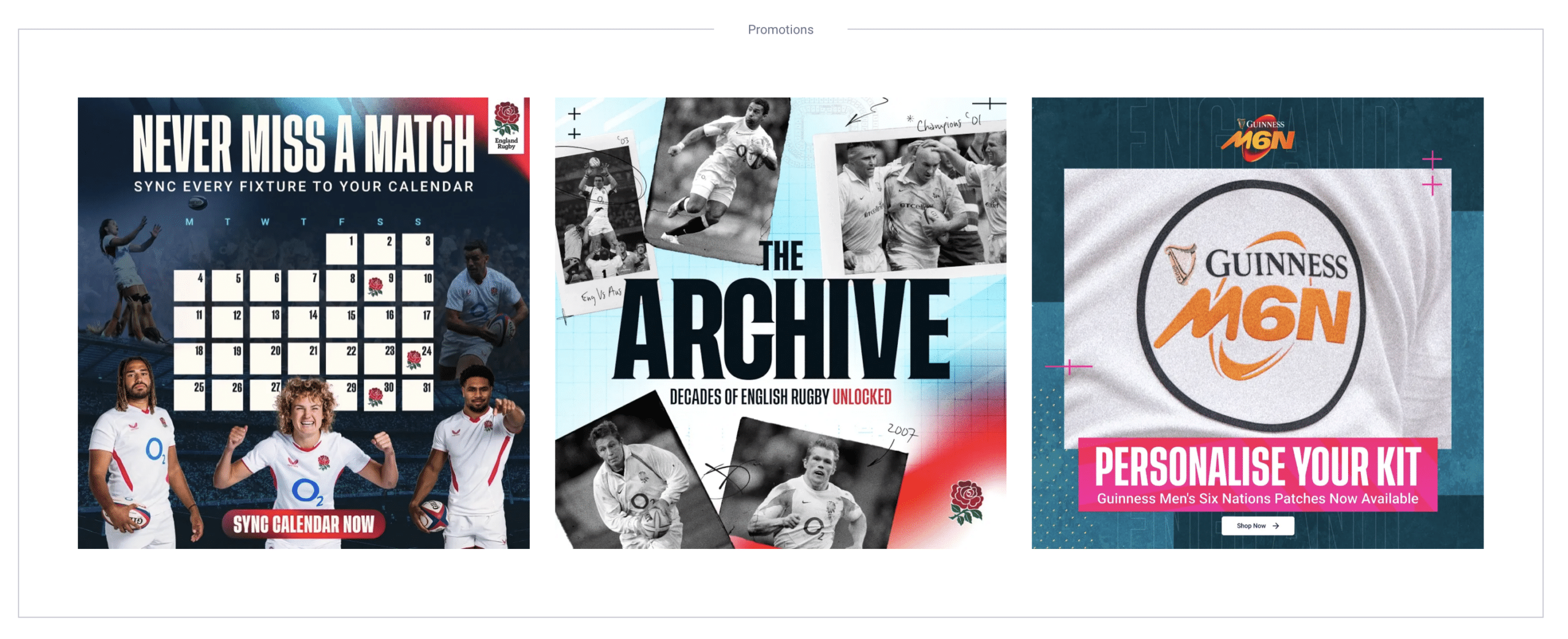
In-article banners
Calendar sync doesn’t just live on fixtures pages. The RFU embed banners within other articles across their site, catching fans who are already engaged with content and giving them a prompt to sync right there in the moment.
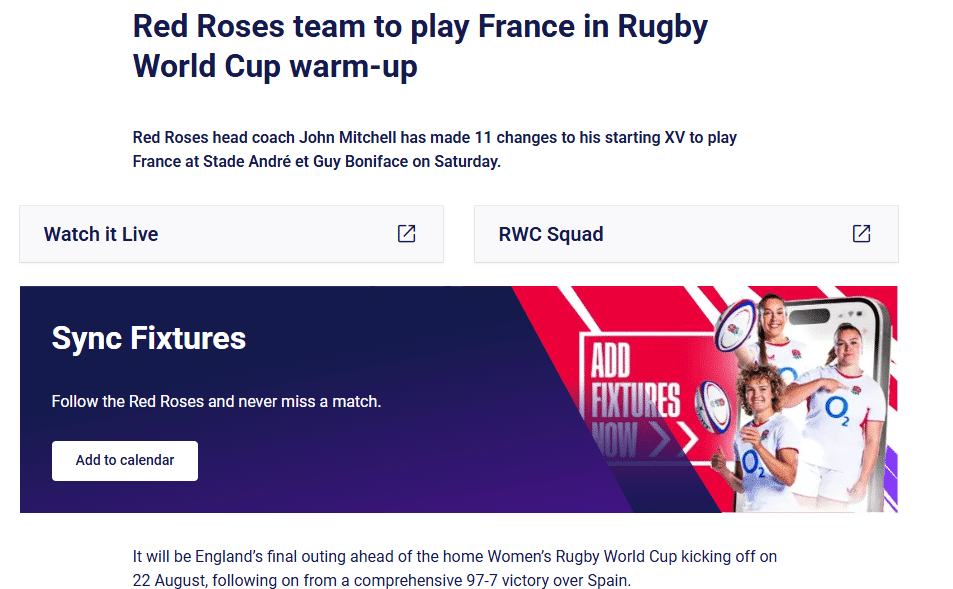
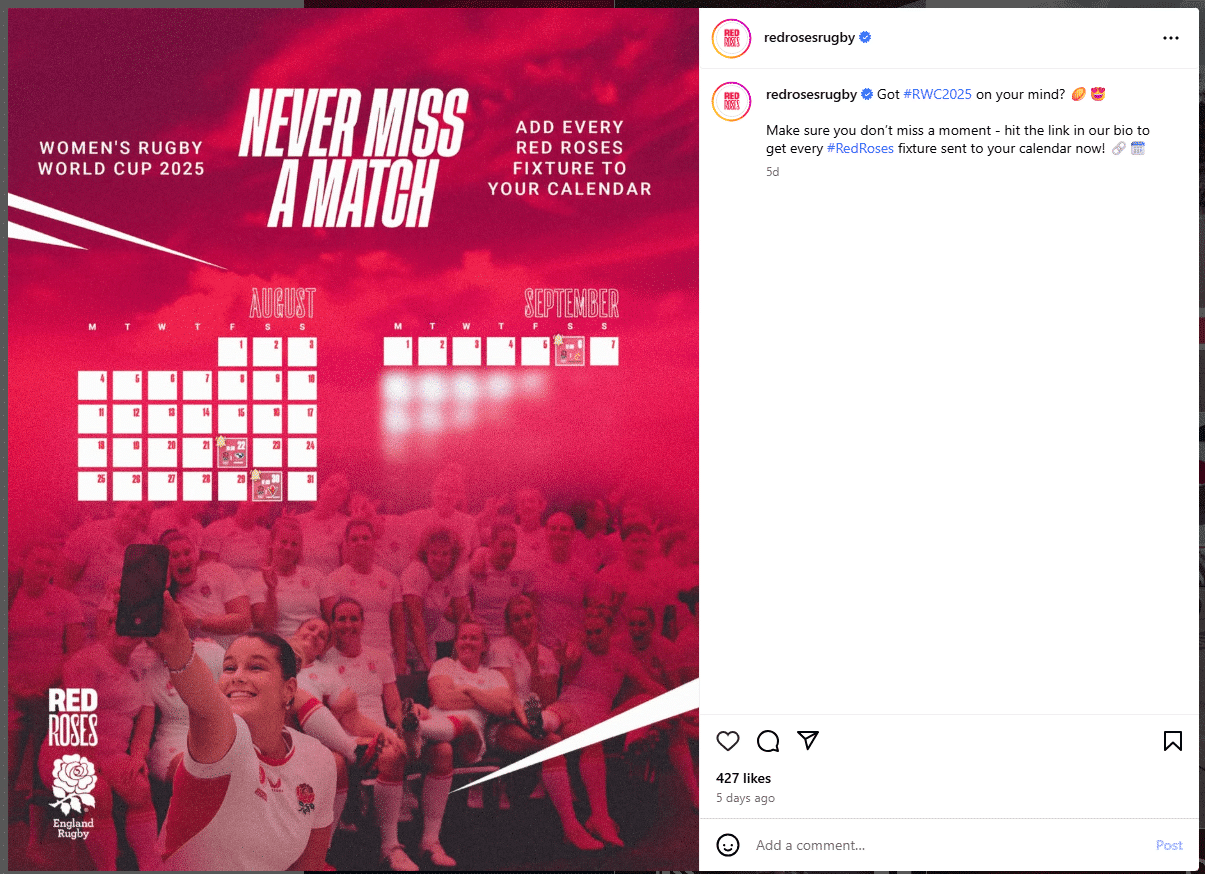
Seasonal social posts
Throughout the year, The Rugby Football Union share calendar sync content across their social channels timed around key moments in the season. New competition announcements, fixture releases, and tournament launches all become natural hooks to get the message in front of fans when interest is at its peak.
YouTube
They’ve also used YouTube to host how-to video content, giving fans a longer-form resource they can return to if they need a step-by-step walkthrough.
A dedicated article
The Rugby Football Union have published a dedicated article on ECAL, giving the topic its own space and making it discoverable for fans who might search for it directly or come across it through their news section.
A support page
They’ve even gone as far as creating a troubleshooting page in their help centre for fans who run into any issues. It’s a thoughtful finishing touch that makes the full experience feel considered and well-supported.
The Playbook
If you’re looking to take inspiration from what The Rugby Football Union have done, the principles are straightforward.
Make it visible. Give calendar sync a prominent home wherever fans are consuming schedule content, whether that’s your homepage, your fixtures hub, or your social profiles.
Tie it to your biggest moments. Tournament launches, fixture releases, and squad announcements are the moments fans are most engaged. That’s when you push calendar sync hardest.
Let your athletes tell the story. Player-led content explaining how to sync a calendar is personal, relatable, and cuts through in a way that branded posts alone simply can’t.
Keep the message simple. Never miss a match. Add fixtures now. That’s all you need.
Why It’s Worth Sharing
The Rugby Football Union show that promoting calendar sync effectively is less about any single placement and more about showing up consistently, across the channels and moments that matter to fans. Every touchpoint you add makes it more likely that fans will sync, and the more fans who sync, the more value you get from the tool over the long term. It doesn’t require a complex strategy, just a consistent commitment to making it easy and visible.
Want to build a calendar sync strategy for your organisation? Get in touch to find out how ECAL can work for you.


